From aerospace structures to everyday consumer electronics, aluminum alloys are a cornerstone of modern manufacturing. Their popularity stems from a unique combination of strength, corrosion resistance, and, most importantly, low weight. Understanding the density of aluminum is not just an academic exercise; it is a critical factor that directly influences product design, manufacturing processes, and final cost. For any project involving this versatile metal, a deep knowledge of aluminum density is essential for success.
At CastMold, we specialize in high-pressure aluminum die casting, turning complex designs into high-quality, precision components. With years of experience, we have seen firsthand how a proper understanding and control of aluminum alloy density can make or break a project. This guide will walk you through everything you need to know, from the fundamental principles to real-world applications, leveraging our expertise to help you make informed decisions for your manufacturing needs.
- What is the Density of Aluminum?
- Density of Different Aluminum Alloys
- Factors Influencing Aluminum Density
- Effect of Aluminum Density on Die Casting
- Applications of Aluminum Density in Industry
- Density of Aluminum & Surface Finishing Processes
- How to Choose the Right Aluminum Density for Your Project?
- Conclusion
What is the Density of Aluminum?
The density of a material is a measure of its mass per unit of volume. For pure aluminum, the widely accepted value is approximately
2.70 grams per cubic centimeter (g/cm³) or 2700 kg/m³. This inherent lightness is what sets aluminum apart from other common structural metals like steel (approx. 7.85 g/cm³) and copper (approx. 8.96 g/cm³), making it nearly three times lighter than steel.
However, the aluminum density is not a fixed constant. It can change based on several factors:
- State and Temperature: Like most materials, aluminum expands when heated, which causes its density to decrease. For example, the density of solid aluminum drops from 2.70 g/cm³ at 20°C to 2.68 g/cm³ at 200°C. This thermal expansion is a critical consideration in high-temperature applications and precision engineering.
- Manufacturing Process: In aluminum die casting, the process itself can influence the final effective density of a part. For instance, if gas or shrinkage porosity occurs during casting, it creates tiny voids within the material, which can reduce its overall density and structural integrity. Controlling the casting process to minimize porosity is crucial for achieving the desired material properties and performance.
Density of Different Aluminum Alloys
Pure aluminum is relatively soft. To enhance its properties like strength and hardness, it is mixed with other elements to create alloys. These alloying elements alter the material’s characteristics, including its density. For die casting, specific alloys are chosen for their unique combination of castability, mechanical properties, and cost-effectiveness.
At CastMold, we frequently work with leading die-casting alloys like ADC12, A380, and AlSi9Cu3. Our selection is always driven by the specific requirements of our clients’ projects, balancing performance with manufacturing efficiency.
Here is a comparison of common die-casting aluminum alloys:
| Aluminum Alloy | Density (g/cm³) | Applications |
| ADC12 | 2.74 | Automotive components, electronic housings, power tools, appliances |
| A380 | 2.76 | Telecommunications equipment, machinery parts, furniture, hand tools |
| AlSi9Cu3 | 2.79 | High-strength components, engine parts, aerospace and automotive applications |
To better understand the variety of aluminum alloys, it’s helpful to know the international naming system. Aluminum alloys are categorized into series using a four-digit number, where the first digit signifies the principal alloying element(s). This system provides a quick way to identify the alloy’s basic characteristics:
- 1xxx Series: This series represents commercially pure aluminum with a minimum of 99.0% aluminum content. These alloys are known for their excellent corrosion resistance and workability but have low strength.
- 2xxx Series: The primary alloying element is copper (Cu). These are heat-treatable alloys known for their high strength-to-weight ratio, making them a top choice for aerospace applications.
- 3xxx Series: Manganese (Mn) is the main alloying element, providing moderate strength and excellent formability. These non-heat-treatable alloys are often used in cookware and heat exchangers.
- 4xxx Series: Silicon (Si) is added to lower the melting point and improve fluidity, making these alloys ideal for welding wire and brazing applications.
- 5xxx Series: The main alloying element is magnesium (Mg). This series includes the highest-strength non-heat-treatable alloys, valued for their superb corrosion resistance, especially in marine environments.
- 6xxx Series: Alloyed with both magnesium (Mg) and silicon (Si), this series offers a versatile combination of good strength, corrosion resistance, and machinability. 6061 is one of the most common alloys used in structural applications.
- 7xxx Series: With zinc (Zn) as the primary alloying element, this series produces the highest-strength heat-treatable aluminum alloys, used in high-stress applications like aircraft frames and high-performance sports equipment.
To provide a broader perspective, the following chart covers a wide range of common aluminum alloys available on the market.
Density Chart for Aluminum Alloys
| Alloy Series | Alloy Grade | Density (g/cm³) |
| 1xxx (Pure Aluminum) | 1050 | 2.71 |
| 1100 | 2.71 | |
| 1200 | 2.71 | |
| 2xxx (Copper) | 2014 | 2.81 |
| 2024 | 2.78 | |
| 3xxx (Manganese) | 3003 | 2.73 |
| 3004 | 2.73 | |
| 3005 | 2.74 | |
| 4xxx (Silicon) | 4032 | 2.68 |
| 4045 | 2.68 | |
| 5xxx (Magnesium) | 5052 | 2.68 |
| 5083 | 2.66 | |
| 5183 | 2.66 | |
| 5456 | 2.66 | |
| 6xxx (Magnesium & Silicon) | 6061 | 2.70 |
| 7xxx (Zinc) | 7075 | 2.81 |
| 7085 | 2.82 | |
| 8xxx (Other Elements) | 8006 | 2.70 |
| 8001 | 2.70 | |
| Cast Alloys | A319 | 2.74 |
| A356 | 2.68 | |
| A380 | 2.76 | |
| A390 | 2.85 | |
| AlSi12 | 2.65 |
Factors Influencing Aluminum Density
The final density of an aluminum alloy part is determined by its chemical composition and the manufacturing process it undergoes.
- Alloying Elements: The type and percentage of alloying elements are the primary factors. Adding elements that are heavier than aluminum will increase the alloy’s density, while lighter elements will decrease it.
- Copper (Cu) and Zinc (Zn) are denser than aluminum and are added to increase strength, resulting in a higher final density, as seen in alloys like A380 and AlSi9Cu3.
- Silicon (Si) has a density close to aluminum, so its impact is less pronounced, but it is crucial for improving the fluidity of the molten metal during casting.
- Magnesium (Mg) is lighter than aluminum and can be used to create alloys with lower density and excellent corrosion resistance.
- Temperature: As mentioned, higher temperatures cause aluminum to expand, lowering its density. This is a critical variable to control during the die-casting process to ensure dimensional stability.
- Die Casting Process: High-pressure die casting is designed to force molten metal into the mold cavity, creating dense, solid parts. However, factors like trapped gas, shrinkage, or impurities can lead to porosity, which effectively lowers the density of the finished component.
At CastMold, we leverage our deep metallurgical knowledge to achieve precise outcomes. By carefully controlling the alloy composition and optimizing every parameter of the die-casting process—from melt temperature to injection pressure—we ensure that the final part meets our clients’ exact specifications for weight, strength, and cost.
Effect of Aluminum Density on Die Casting
The density of aluminum is not just a final property; it actively influences the entire die-casting process from start to finish.
- Weight and Cost: Density directly determines the weight of a cast part. Since raw material is priced by weight, a lower-density alloy can sometimes lead to cost savings. More importantly, in industries like automotive and aerospace, reducing component weight is a primary goal, making aluminum density a key design parameter.
- Mold Flow and Filling: The composition of an alloy, which dictates its density, also affects its fluidity (how easily it flows in a molten state). Alloys with excellent fluidity, like those high in silicon, can fill complex, thin-walled molds more effectively, resulting in higher-quality parts with fewer defects like incomplete filling or cold shuts.
- Quality and Integrity: A well-controlled process that produces a dense, non-porous casting results in a part with superior mechanical strength, pressure tightness, and surface finish. Porosity, which reduces density, can create weak points that may lead to part failure under stress.
This is where CastMold’s expertise becomes invaluable. We utilize advanced simulation software and process controls to predict how a specific alloy will behave. Our mold designs incorporate optimized gating and venting systems to ensure smooth, complete filling and to eliminate trapped air. This meticulous approach allows us to manufacture highly complex, high-precision parts that are both lightweight and structurally sound.
Applications of Aluminum Density in Industry
The lightweight nature of aluminum alloys is a game-changer across numerous industries. Here are a few examples where CastMold has helped clients leverage the low density of aluminum to their advantage.
- Automotive Industry: Lightweighting is a top priority for automakers to improve fuel efficiency and extend the range of electric vehicles (EVs). Replacing steel with aluminum can reduce a vehicle’s body and chassis weight by up to 50%. A 10% reduction in vehicle weight can improve fuel economy by 6-8%. For EVs, this means a longer range or the ability to use a smaller, less expensive battery pack.
- Electronics and Telecommunications: In this sector, aluminum is prized for its ability to dissipate heat and provide electromagnetic shielding. The alloy’s thermal conductivity is critical for components like heat sinks and enclosures for servers and 5G equipment.
- Lighting Industry: Modern LED lighting fixtures require housings that are both lightweight for easy installation and effective at dissipating heat to ensure the longevity of the electronics.
Density of Aluminum & Surface Finishing Processes
The properties of an aluminum alloy, including its composition and density, also affect how it responds to post-processing treatments like surface finishing and CNC machining.
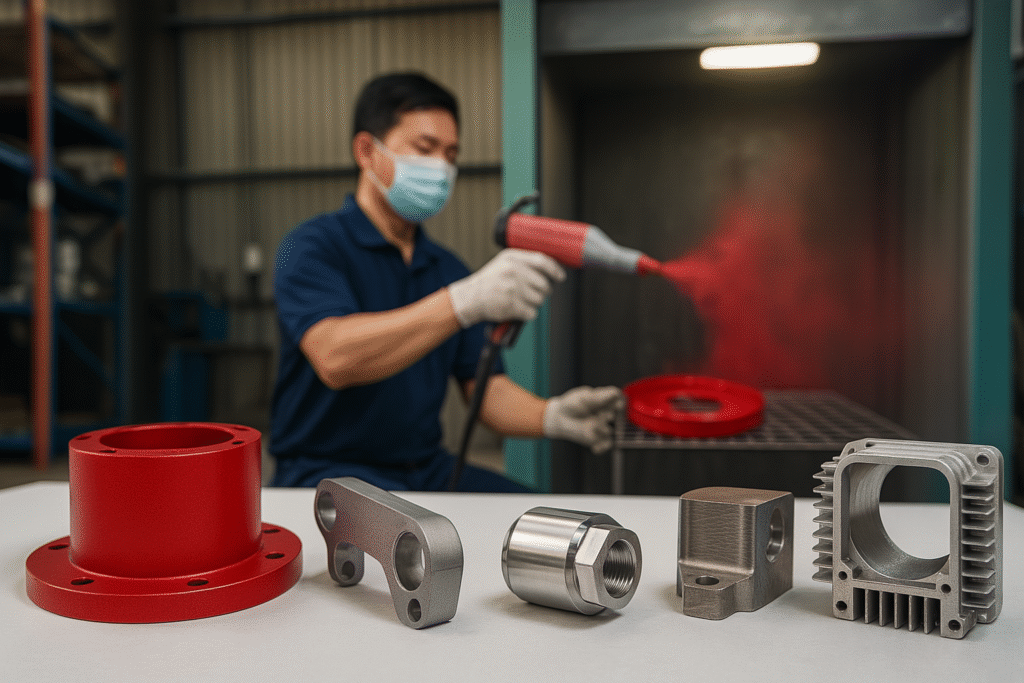
- Surface Finishing: Processes like anodizing, powder coating, and sandblasting are used to enhance appearance and corrosion resistance. However, the alloy’s composition plays a huge role. Cast alloys with high silicon content, such as ADC12 and A380, can result in a darker, less uniform appearance after anodizing compared to wrought alloys. The density and integrity of the casting are also important; a porous surface will not finish evenly.
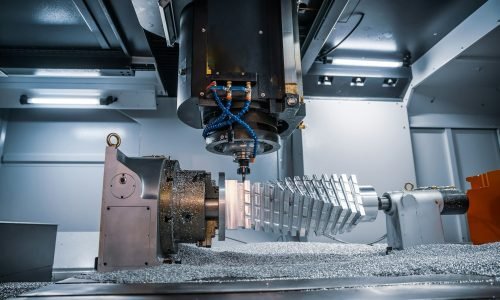
- CNC Machining: Aluminum’s low density is a significant advantage in machining. It is lighter and easier to handle, and it requires less cutting force than denser metals like steel. This translates to faster machining speeds, higher material removal rates (MRR), and reduced tool wear, making the process more efficient and cost-effective.
CastMold offers a true one-stop solution. We manage your project from initial design consultation and die casting to secondary CNC machining and final surface finishing. Our integrated approach ensures that the chosen alloy and casting process are perfectly aligned with the requirements of any post-processing, guaranteeing a high-quality finished part that meets all your specifications.
How to Choose the Right Aluminum Density for Your Project?
Selecting the right alloy—and therefore the right aluminum density—is a critical decision. Here is a simple framework to guide your choice:
- Define Your Primary Goal: Is it maximum strength, minimum weight, corrosion resistance, or cost-effectiveness?
- Consider the Application Environment: Will the part be exposed to high temperatures, corrosive elements, or high mechanical stress?
- Evaluate Complexity: Does your part have intricate details or thin walls that require an alloy with excellent fluidity?
- Assess Post-Processing Needs: Will the part require a specific surface finish or extensive machining?
Navigating these trade-offs can be complex. This is why partnering with an expert is crucial. The CastMold engineering team works closely with clients from the very beginning. We help you analyze your project requirements and select the optimal aluminum alloy that delivers the best performance, manufacturability, and value.
Conclusion
Understanding the density of aluminum and its alloys is fundamental to successful product development and manufacturing. It’s a key property that influences everything from material selection and process control to final performance and cost. Whether you are lightweighting an automotive component, designing a thermal solution for electronics, or creating any other high-performance part, the nuances of aluminum alloy density cannot be overlooked.
At CastMold, we combine state-of-the-art technology with decades of hands-on experience in aluminum die casting. Our commitment to quality and precision ensures that we deliver parts that are not only dimensionally accurate but also optimized for weight, strength, and performance.
Ready to leverage the power of lightweight aluminum for your next project? Contact the experts at CastMold today to discuss your requirements and discover how our aluminum die casting services can bring your vision to life.